1.What are the three types of PLC?
PLCs are commonly divided into relay output, transistor output, and triac output types. Relay output PLCs can handle both AC and DC loads, transistor output PLCs are suited for fast DC switching applications, and triac output PLCs are typically used for AC output control.
2.What are the 5 PLC programming languages?
The five widely used PLC programming languages are Ladder Diagram (LD), Sequential Function Chart (SFC), Function Block Diagram (FBD), Structured Text (ST), and Instruction List (IL). These language options help engineers choose the most practical format for machine control and process automation.
3.What is an automation panel used for?
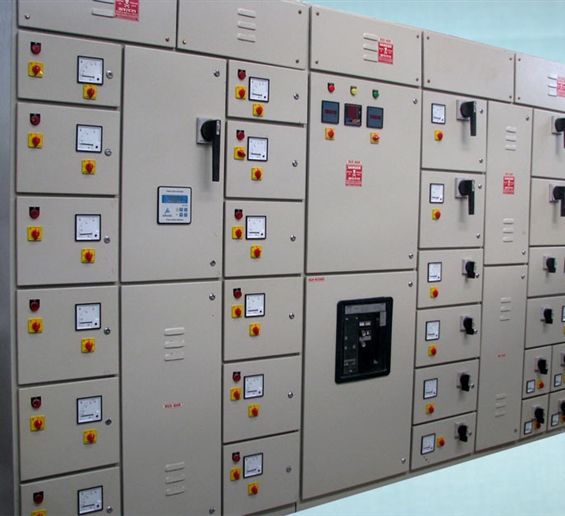
An automation panel is used to control, monitor, and protect machines or industrial processes through PLCs, HMIs, relays, drives, sensors, and instrumentation devices. It helps automate operating sequences, reduce manual intervention, and improve process consistency.
4.What components are typically included in an automation panel?
A typical automation panel may include a PLC, HMI, SMPS, relays, terminals, contactors, MCBs or MCCBs, overload protection, VFDs, communication modules, and field wiring interfaces. The exact configuration depends on the application and control logic requirements.
5.Where are automation panels commonly used?
Automation panels are widely used in packaging machines, bagging systems, process plants, molding machines, conveyor systems, furnace controls, water treatment systems, and factory production lines. They are suitable wherever dependable sequence control and machine automation are needed.
6.Can automation panels be customized for specific machines or processes?
Yes. Automation panels can be customized for machine type, I/O count, control philosophy, enclosure size, operating voltage, communication protocol, and environmental conditions. This allows the panel to match the site layout, production logic, and safety requirements of the application.