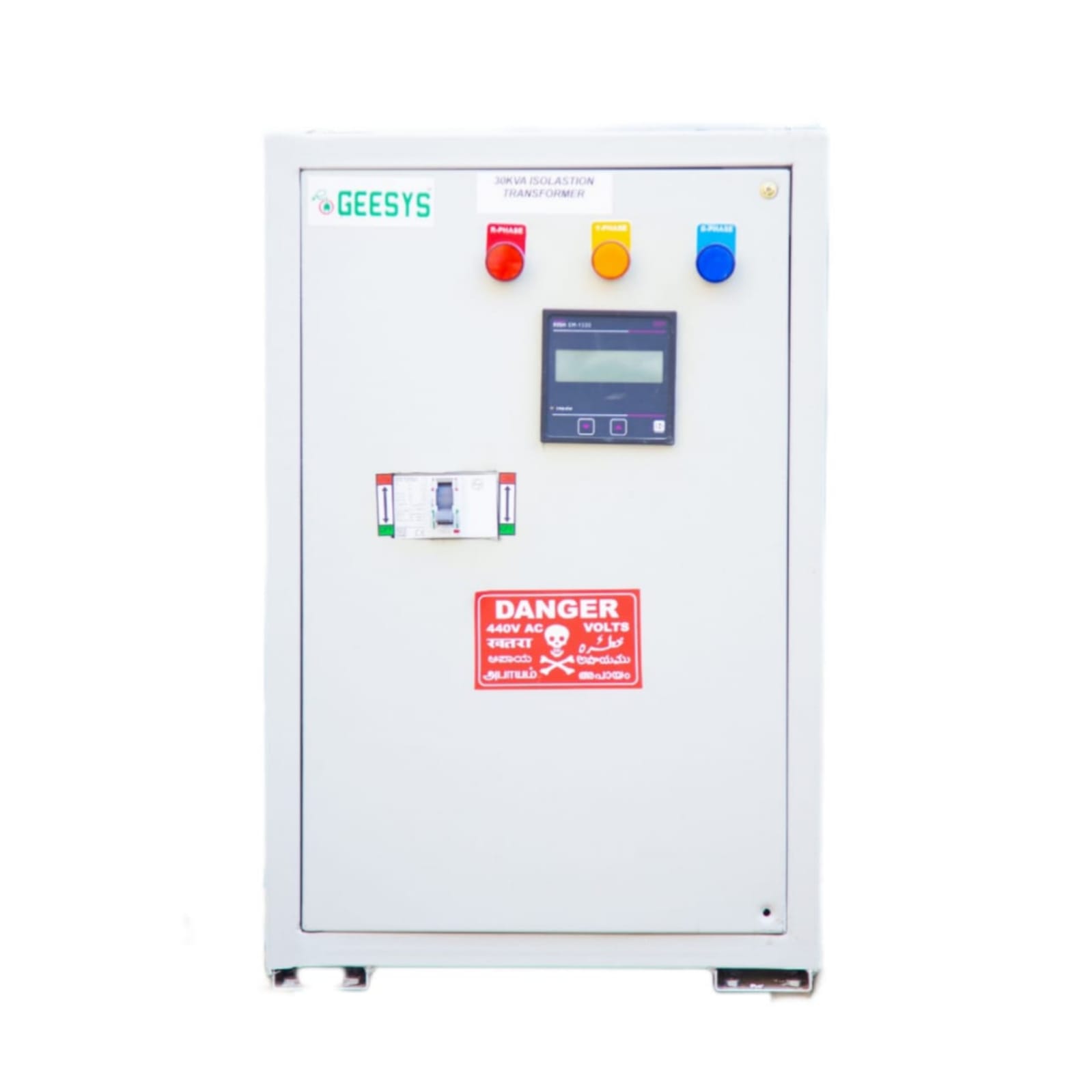
1.What is an Isolation Transformer?
An isolation transformer transfers electrical power from the source to the load while providing electrical separation between input and output. This isolation helps improve safety, reduce electrical noise, and protect connected equipment.
2.What happens if you overload a transformer?
Frequent overloading causes excessive heating, insulation stress, and reduction in transformer life. If overload conditions continue for long periods, the transformer may suffer winding damage, reduced efficiency, or eventual failure.
3.What is an inverter transformer used for?
An inverter transformer is used in inverter and UPS systems to provide voltage matching, electrical isolation, and reliable power transfer between inverter circuits and connected loads. It is commonly applied where stable output and protection from disturbances are required.
4.Why are inverter transformers important in UPS and inverter systems?
Inverter transformers help manage isolation, voltage adaptation, and load compatibility in UPS and inverter applications. They also support safer operation, improved system protection, and dependable performance under non-linear or critical load conditions.
5.Where are inverter transformers commonly used?
They are commonly used in UPS systems, power backup equipment, industrial automation, telecom installations, data processing systems, CNC machinery, process plants, and other applications that need controlled and isolated inverter power.
6.Can inverter transformers be customized for specific project needs?
Yes. Inverter transformers can be customized for kVA rating, input and output voltage, phase configuration, frequency, cooling method, insulation class, winding material, and enclosure type based on the inverter system and site requirement.